
Commercial Loss Claims & Litigation With Trusted Financial Insight
Last updated: October, 2026
Commercial loss claims can leave you facing difficult financial questions, especially when the value of a loss is disputed. Partners Gary Phelps, CPA, CMA, CFF, CFE, Danielle Martens, CPA, CA, DIFA, CFF and AJ Miller, CPA, CGA, bring specialized expertise, to provide independent loss analysis and litigation support services that help you understand the numbers and move toward resolution with confidence.
If a commercial dispute progresses to litigation, having independent, supportable financial analysis becomes even more important. Davis Martindale’s Commercial Loss Litigation team brings over 100 years of combined senior experience to defence and plaintiff engagements involving breach of contract, insurance claim disputes, theft, arson and wrongful dismissal.
Independent, Common-Sense Analysis for Every Commercial Loss Claim
Davis Martindale is known in the Ontario and Canadian commercial litigation industry for providing independent, common-sense analysis of the facts, statistics and jurisprudence each claim requires, delivered accurately, on time and cost-effectively.
Whether the dispute involves a breach of contract, wrongful dismissal, or a disputed insurance claim, we build each analysis around the specific facts of your file, not a generic template. We consider the contract terms, financial records, and industry context that shaped the loss. This depth of understanding becomes especially important when opposing counsel’s expert reviews the same numbers. A report grounded in the facts of the file is better equipped to withstand scrutiny than a formulaic calculation, which is why clients return to us file after file.
Areas of Expertise
Commercial Loss Claims
Commercial loss litigation often involves disputes where the financial impact must be independently quantified and supported with reliable evidence. Davis Martindale assists insurers, lawyers, and businesses by evaluating damages, analyzing financial records, and preparing objective loss calculations for matters including:
- Insured commercial loss damage claims, first-party and subrogation
- Uninsured commercial loss damage claims
- Breach of contract
- Preparation for examination for discovery
- Large loss claims in farming, service, professional, processing, manufacturing, transportation, retail and wholesale sectors
- Theft
- Wrongful dismissal
Last updated: October 2026
Frequently Asked Questions
A commercial loss litigation accountant provides the litigation support services behind a commercial dispute, independently quantifying economic damages arising from breach of contract, wrongful dismissal, an insured or uninsured property loss, theft or business interruption. The work typically starts with reviewing financial records, sales information, contracts and operating results to establish what happened financially, then builds an objective, defensible calculation from that evidence.
Depending on where the file is, the output ranges from a concise report for negotiation to a full expert report for discovery and, if needed, trial testimony. Where the underlying loss was covered by insurance, the claim often starts on our Commercial Insurance Claims page, with litigation only becoming necessary if that claim is disputed.
Depending on the commercial loss claim, documents typically include financial statements, tax returns, sales records, contracts, payroll records, invoices, inventory reports and banking records. For a breach of contract matter, the contract itself and any related correspondence become central to the analysis, since the damages calculation must be grounded in what was agreed to. For larger or more complex claims, multiple years of historical financial information are usually reviewed to establish expected business performance and quantify damages on a supportable basis, rather than relying on a single year that may not reflect normal operations. Gathering these records early is one of the biggest factors in how quickly a damages calculation can move forward.
Picture a warehouse fire that destroys a business's inventory. If the loss is covered by property insurance, the business can make a claim against its own insurer — a first-party claim. After paying the claim, the insurer may then pursue the party responsible for the fire to recover what it paid, a process known as subrogation. Now consider a supplier that fails to deliver goods a business has already paid for, with no insurance policy covering the resulting loss. In this case, the business must pursue the supplier directly, typically through a breach of contract or negligence claim.
The route to recovery may be different, but the approach to quantifying the loss is much the same: both require an independent, evidence-based assessment grounded in financial records, contracts, and operating results. For an insured loss, the matter will often begin as a Commercial Insurance Claim, with litigation arising only if the claim becomes disputed.
Say a manufacturer contracts with a supplier for parts at a fixed price, but the supplier fails to deliver. The manufacturer is forced to source the parts elsewhere at a higher cost and may also lose profit on orders it can no longer fill on time. A breach of contract damages calculation measures the financial impact of that failure — comparing the position the manufacturer would have been in had the contract been fulfilled with its actual position following the breach. Depending on the circumstances, damages may include higher replacement costs, lost profits, and other costs directly resulting from the breach.
Determining that amount requires more than estimating what the contract was worth on paper. It means reviewing the terms of the agreement alongside financial records, sales data, and operating results to understand what happened and quantify the resulting loss. If the matter proceeds to litigation, the calculation needs to withstand scrutiny from opposing counsel's own expert.
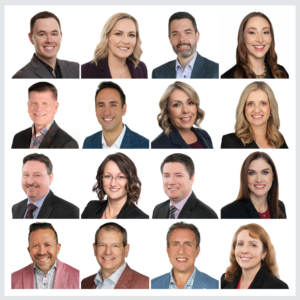
Meet the Team
Our independent loss accounting experts hold a variety of accounting, forensic, fraud and insurance designations which we use to tailor our service to your direct needs.
Sorry, we couldn't find anyone with that name. Please try again with a different name.
Partners
-


AJ
MillerCPA, CGA
Partner, Insurance Claims & Litigation -


Danielle
MartensCPA, CA, DIFA, CFF
Partner, Insurance Claims & Litigation -


Gary
PhelpsCPA, CMA, CFF, CFE
Partner, Insurance Claims & Litigation


All Team Members
-

Abdelrahman
NasirCFE
Associate, Insurance Claims & Litigation -

Abdulshakur
Abdalle
Associate, Insurance Claims & Litigation -

Adam
GianottiCPA, CGA, CFF
Director, Insurance Claims & Litigation -

Alika
Dotel
Associate, Insurance Claims & Litigation -

Allison
Beaulieu
Associate, Insurance Claims & Litigation -

Angela
Kamarlingos
Administrative Support, Insurance Claims & Litigation -

Baillie
SpencerCPA, CFE
Manager, Insurance Claims & Litigation -

Brandon
GlasserCPA
Senior Associate, Insurance Claims & Litigation -

Carla
RobertsonCPA, CGA
Senior Manager, Insurance Claims & Litigation -

Carly
Mitchell
Administrative Support, Insurance Claims & Litigation -

Haileigh
Kipping
Senior Associate, Insurance Claims & Litigation -

Harleen
Kaur
Thind
Associate, Insurance Claims & Litigation -

Jenna
DayCPA, CMA
Senior Manager, Insurance Claims & Litigation -

Jodie
HamerCPA, CGA
Senior Manager, Insurance Claims & Litigation -

Keytiane
Da
Silva
Associate, Insurance Claims & Litigation -

Marah
Bos
Associate, Insurance Claims & Litigation -

Nathan
Lyons
Associate, Insurance Claims & Litigation -

Nima
Morowat
Associate, Insurance Claims & Litigation -

Pauline
Shen
Administrative Support, Insurance Claims & Litigation -

Ryan
PageCPA, CFE, CFF
Senior Associate, Insurance Claims & Litigation -

Sarah
Nuez
Associate, Insurance Claims & Litigation -

Sydney
Ellis
Associate, Insurance Claims & Litigation -
 Thais Ivo| Associate, Insurance Claims & Litigation | Davis Martindale
Thais
Ivo
Associate, Insurance Claims & Litigation -

Thiago
Santos
Associate, Insurance Claims & Litigation -

Tyler
Cortese
Senior Associate, Insurance Claims & Litigation


Work With Us
Our Advisors are ready to have
a personalized discussion with you.